What the Numbers Showed
The Jenny Krauss belt line had followed a trajectory that, in most retail organizations, would have generated a quiet conversation about whether to continue carrying the product. 2022: $216,226 in sales. 2023: $271,305, a 25% increase. 2024: $196,819, a 27% decline. Three years of data. A peak and a drop. Total sales under $200,000 on an item with real production costs and limited catalog real estate. The natural conclusion in most planning meetings would have been to reduce the buy, reduce the space, let the style age out gracefully. Michael held the belt in his hands and reached a different conclusion.
Understanding the Product
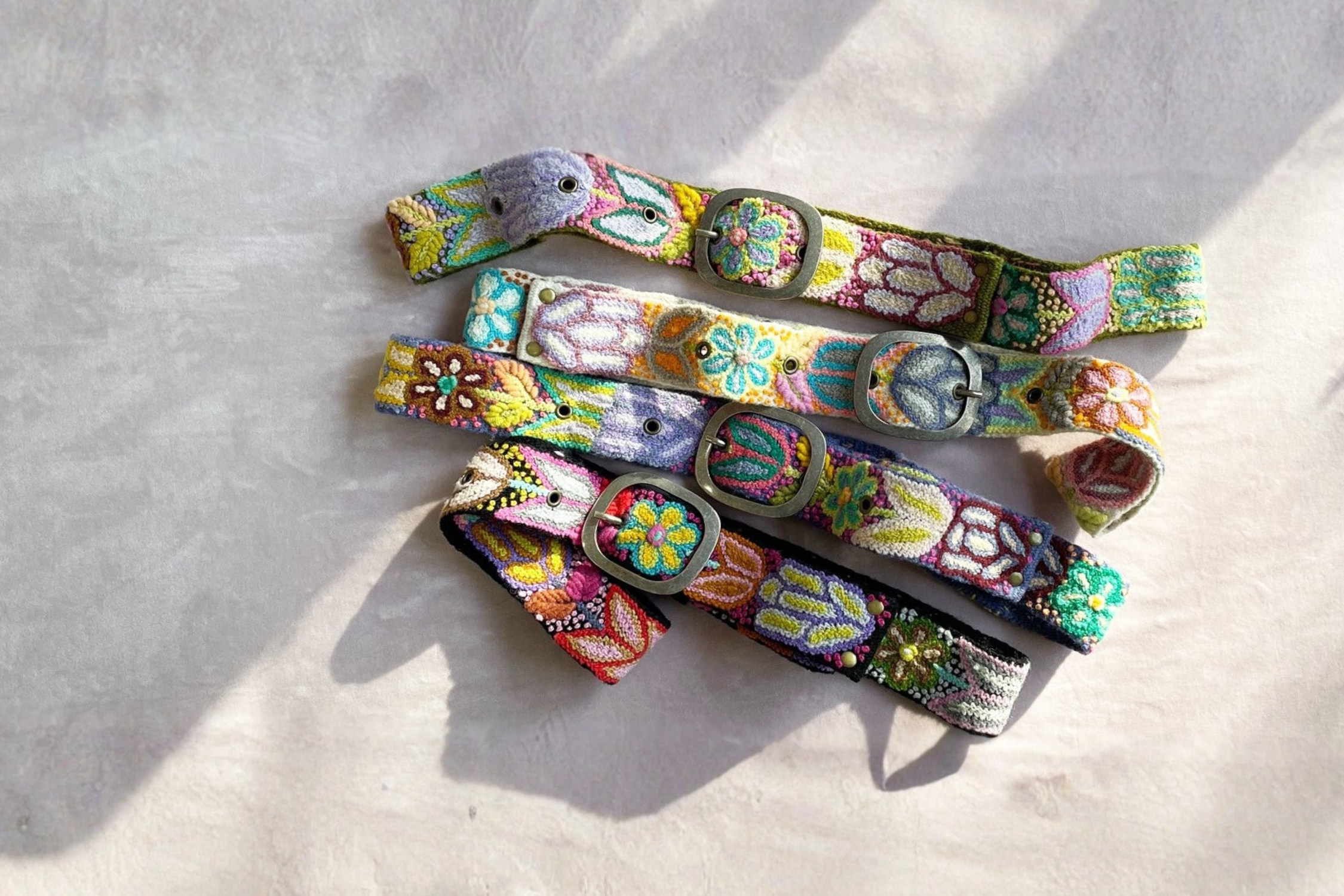
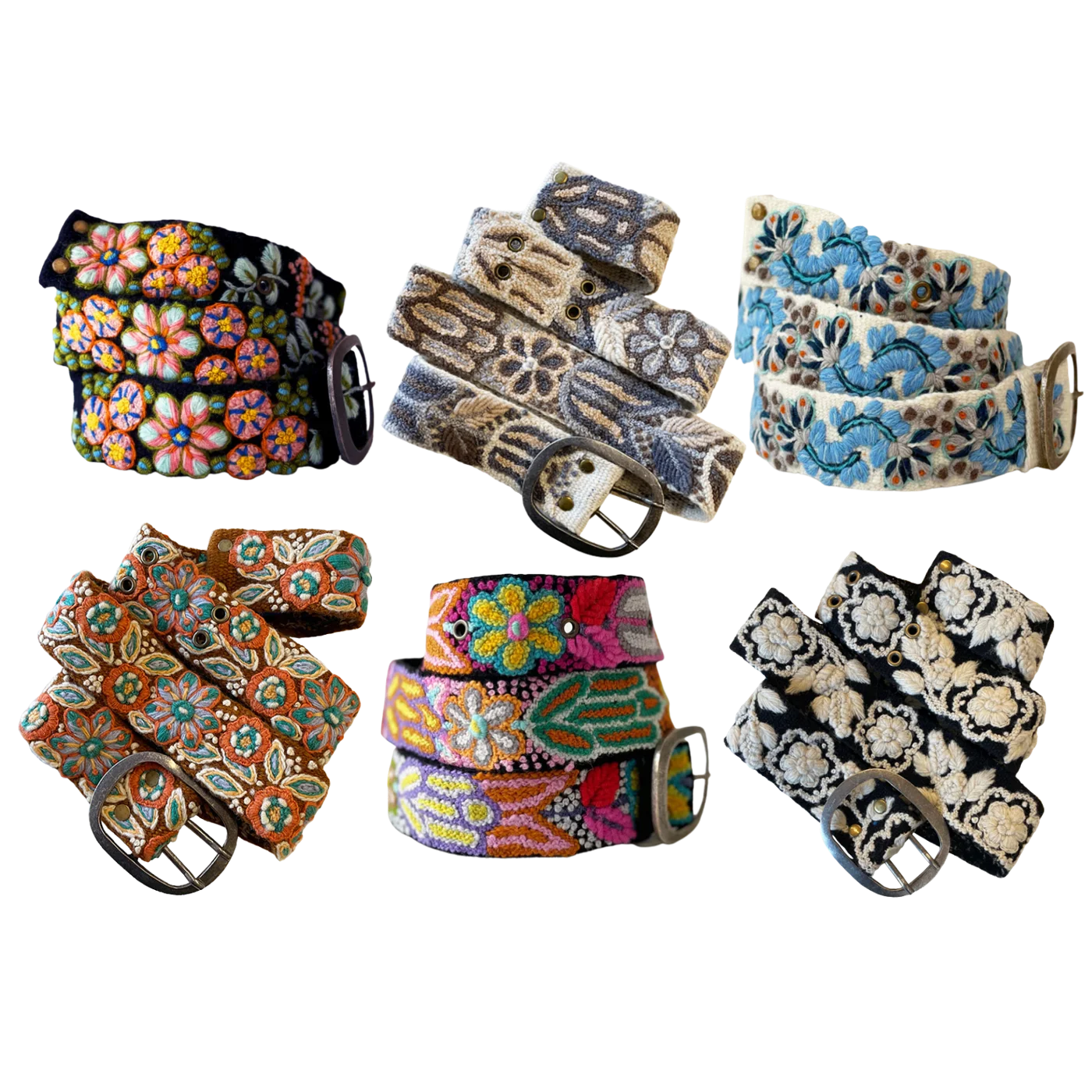
Jenny Krauss belts are not a mass-produced accessory. They are made by a network of more than 900 artisans, mostly women, living in and around Ayacucho in the central Peruvian Andes. The embroidery traditions in that region trace back to pre-Columbian times. Each belt is made on hand-loomed fabric with hand-dyed yarn, embroidered by individual artisans working from their homes, sometimes with their children nearby, earning income that in many cases makes them the primary financial support for their families.
The production ceiling that results from this process is real and fixed. Jenny Krauss can produce approximately 3,000 belts per month. Not 3,000 per week during peak season. Not 3,000 whenever a retailer places a rush order. 3,000 per month, in total, period. That is not a negotiating position. It is the practical limit of what a skilled artisan network of this size can produce while maintaining the quality that makes the product worth selling.
This detail matters because it completely changes how the ordering strategy needs to work. And it was the detail that the brand's existing buying approach had been ignoring.
Why the Decline Was Not a Demand Problem
When Michael examined the ordering history alongside the sales data, the picture clarified quickly. The brand had been buying the Jenny Krauss line in the traditional retail pattern: large orders placed seasonally, concentrated around catalog drop windows, followed by periods of little or no ordering. For brands working with factories that have flexible capacity, this approach is manageable. A manufacturer can add shifts, accelerate production, and meet the spike. Jenny Krauss cannot do that. Her artisans work on schedules that reflect their lives, their farms, and their families. You cannot call them on a Tuesday and ask them to double output by Friday.
What the boom-and-bust ordering pattern had created was inconsistent supply. Some catalog windows had solid inventory. Others ran short. When inventory ran short on a product that was actively being browsed by customers, sales stopped. When sales stopped, the performance numbers for the season fell. When performance numbers fell, confidence in the product fell. When confidence fell, the next buy was smaller or more cautious. Smaller buys produced more stockouts. The cycle repeated.
The decline from $271,305 in 2023 to $196,819 in 2024 was not customers walking away from embroidered Peruvian belts. It was the predictable result of a buying strategy that was incompatible with the vendor's production reality.
There was a second layer to the problem. Despite strong sell-through in the windows where inventory existed, the belts had received minimal dedicated marketing support since COVID. They blended into full outfit photographs. They were not featured with their own placement. Their story, the artisans, the embroidery tradition, the quality of the craft, was not being told to the customer. A product can only do so much without the marketing support to amplify it.
The Two-Part Fix
Michael and the buying team addressed both problems at the same time.
Fixing the supply chain through level-loading: The concept of level-loading production is not complicated. Instead of placing orders in large seasonal spikes, you establish a consistent monthly order cadence placed well in advance, typically six months out, with the ability to adjust quantities up or down before shipment based on current sell-through data. For Jenny Krauss, this meant smaller orders placed more frequently, creating a steady flow of inventory rather than a feast-or-famine pattern.
Predictable orders gave Jenny the ability to plan her artisan capacity. She knew what was coming. She could distribute work consistently. She did not have to scramble for a rush order that her production model cannot accommodate. The artisans had steady work. The retailer had steady supply.
Fixing the marketing through catalog investment: The February catalog gave the Jenny Krauss belts a dedicated placement for the first time: one-third of a page, shot as statement pieces rather than accessories buried in a full outfit. The embroidery was prominent. The vibrant colors were featured against denim backgrounds. The copy told the story of what made the product different.
The color launch strategy was built out alongside the placement decision. Two colors launching in one catalog, with a third held for the next drop. When the new color appeared, it drove traffic to the product page, where the earlier colors were still available with full size integrity. Sometimes customers bought the new color. Sometimes they bought one of the originals. Sometimes they bought both. In every case, the planned launch created a fresh reason for engaged customers to return to a product that might otherwise have been losing momentum.

| Month | 2022 | 2023 | 2024 | 2025 |
|---|---|---|---|---|
| January | $5,273 | $35,287 | $31,435 | $41,224 |
| February | $7,716 | $32,458 | $27,077 | $74,708 |
| March | $15,745 | $33,609 | $30,144 | $73,698 |
| April | $15,611 | $17,231 | $14,634 | $38,077 |
| Total | $44,345 | $118,585 | $103,290 | $227,707 |
The Results
Sales increased 120 percent following the combination of level-loading and dedicated marketing support. The belt line that had been trending toward discontinuation became one of the more compelling growth stories in the accessories category that season.
The product had not changed. The customer had not changed. What changed was the execution surrounding a product that had been set up to struggle by an ordering strategy and a marketing approach that did not match what the product actually needed.
The Harder Lesson
Michael is candid about how this story ends. Despite the wins with Jenny Krauss and several other categories, the broader business shut down in the summer of 2025. The reasons were not product-related. They were organizational. When the foundation of a business is structurally compromised, strong product performance and smart inventory strategy can slow the decline but cannot reverse it alone.
That reality does not invalidate the framework. The Jenny Krauss results were real. The methodology worked. What the situation illustrates is that inventory intelligence is a growth tool, not a rescue operation. It works best in organizations where the operational foundation is solid enough to act on what the data shows.
For brands in that position, the lesson from the belts is simple. A product that looks like it is declining deserves a careful look at whether it was ever given the conditions to succeed. Consistent supply, appropriate marketing support, and a buying strategy that respects the vendor's actual production constraints are the baseline. Without them, almost any product will underperform. With them, products that looked like liabilities have a way of turning into assets.
The data found the truth, stockouts masquerading as declining demand, but data alone didn't sell a single belt. The turnaround came from merchant judgment: reading what the numbers actually meant, respecting the vendor's craft and its real constraints, and working with buying and marketing teams to build a program that gave the product the conditions to succeed. Variant-level visibility finds the story. A merchant who acts on it is what changes the outcome.